If you have been paying attention to the aesthetic conversations happening in Manhattan, you already know that Botox in Upper East Side has quietly become one of the most sought-after treatments among professionals, creatives, and longtime New Yorkers alike. This is not a trend built on social media hype. It is built on results, subtle, …

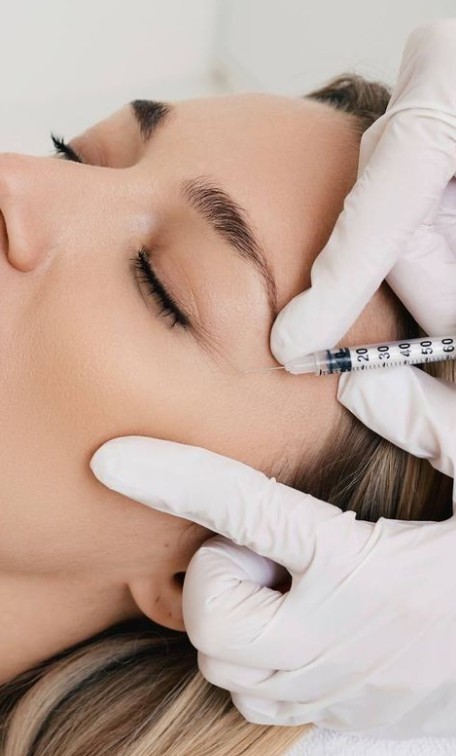
If you have been paying attention to the aesthetic conversations happening in Manhattan, you already know that Botox in Upper East Side has quietly become one of the most sought-after treatments among professionals, creatives, and longtime New Yorkers alike. This is not a trend built on social media hype. It is built on results, subtle, intelligent, and lasting ones.
We have seen this neighborhood blossom into a sort of quiet hub for thoughtful cosmetic care. And the reasons go well beyond proximity to good doctors.
The Upper East Side Has Always Had a Different Standard
There is a reason this zip code has historically attracted people who care a lot about how they present themselves without wanting to look like they tried too hard. Here, culture prizes restraint over excess. Discretion, before drama. A good result is one you can not quite describe; you just look rested, a little clearer around the eyes, more like yourself on your best day.
That sensibility is evident in everything from the way Botox in Upper East Side is talked about to the way it is injected. This is not about chasing volume or chasing youth. It is about calibration. It is also about trust, that the person with the syringe has enough clinical experience to know that less is truly more and enough aesthetic judgment to resist the temptation of over-treating.
We have seen what happens when those two things are not there.” Eyebrows that are too low. Foreheads that do not move at all. Results that tell themselves before the person says anything. We do not supply it, nor do we get asked for it.
Botulinum toxin type A temporarily stops the nerve signals that make certain muscles contract. Give those muscles that crease the forehead, furrow between the brows, or squint at a screen for eight hours of the day a controlled rest, and the overlying skin smooths out. Your face is still entirely your own and fully expressive, but the dynamic lines (caused by movement) are considerably softened.
What Have We Learned About What People Actually Want?
The patients that come through our doors do not want to be ‘done.’ They want to look like themselves, minus the lines of fatigue that do not reflect how they feel inside. They want a brow that does not give the game away in every stressful meeting. They want to stop looking angry in pictures when they are not.
At Elcin Aesthetics, we have found that the most satisfying results happen with honest consultations. This is about your anatomy, the real muscle structure of your face, not a template. “Every face moves differently, and a trained injector maps those movements before placing a single unit of product. The point is not to freeze. The point is to selectively soften.
Here is what we consistently hear from patients after their first session:
- “I do not look done. I just look less tired.”
- “My colleagues asked if I went on vacation.”
- “I wish I had started five years earlier.”
That one comes up a lot. And it taps into something real: Starting preventive treatment in your mid-30s can significantly slow the development of static lines, wrinkles that are there even without movement. And once those lines are etched in, they are harder to treat with neuromodulators alone.
It is Not Just About Wrinkles Anymore
One of the things that surprises new patients is how broad the clinical applications of botulinum therapy actually are. At Elcin Aesthetics, we treat more than fine lines and dynamic wrinkles. Our patients also come to us for:
- Hyperhidrosis: excessive sweating of the underarms, palms, or soles of the feet
- Bruxism: chronic jaw clenching and teeth grinding that can cause jaw pain, headaches, and even change the shape of the lower face over time
- Chronic migraines: a use that has been FDA-approved and studied for over two decades
- TMJ discomfort: tension held in the masseter muscle that responds remarkably well to targeted treatment
This range is important. When you select a provider who understands the medical and aesthetic aspects of the treatment, you are not just getting a technician but a clinician.
How Does Botox in Upper East Side Fit into a Broader Approach?
We often talk to patients about how neuromodulator treatment sits alongside other services. Someone who comes in for Botox in Upper East Side might also be considering lip filler to address volume loss or asymmetry in the mouth area. These two treatments are complementary. Lip filler uses hyaluronic acid to add or restore structure, while botulinum toxin addresses movement. Together, when placed thoughtfully, they create results that look genuinely natural, not constructed.
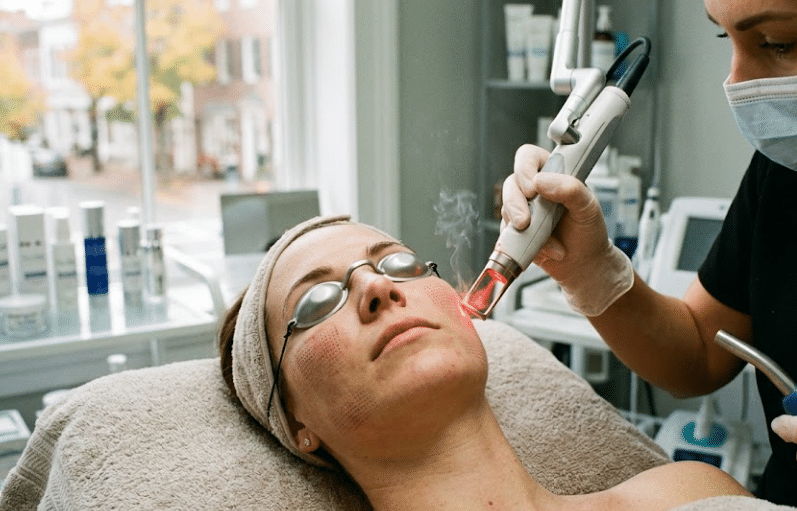
Microneedling has become a regular partner treatment for many of our patients, too. Botulinum therapy aids with concerns driven by muscles, but microneedling works on the surface of the skin itself, stimulating collagen production, improving texture, and reducing pore appearance and mild scarring. They work on totally different mechanisms, and this is why the combination of the treatments over time has yielded results that seem comprehensive rather than one-dimensional.
That is what a good consultation should be: a discussion about which treatments are relevant for you, in what order, and at what frequency. There is no pressure, no upselling, just a straightforward look at what is actually happening with your skin and what your options are.
What is in Store at Elcin Aesthetics
Our practice is across from Bloomingdale’s and within walking distance of much of the Upper East Side and Midtown. We are by appointment only, which allows us to keep a calm, unhurried environment.
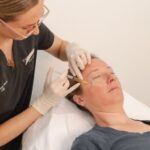
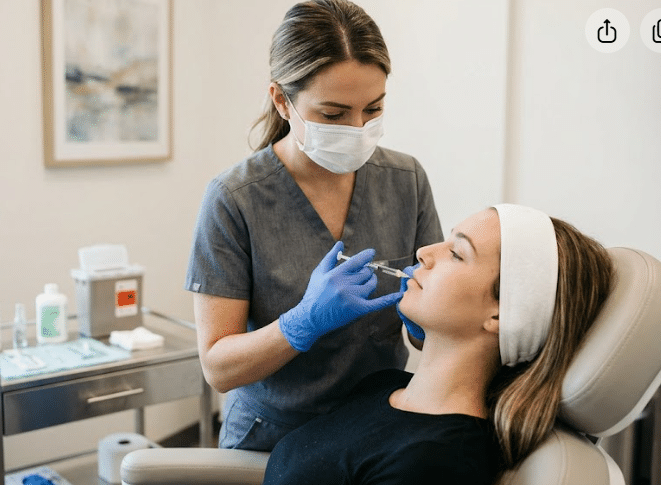
The typical botulinum therapy session lasts 15 to 20 minutes. We use ultra-fine insulin needles. Most patients do not require topical numbing, but it is available if requested. There is almost no downtime, and some slight redness or minor swelling in the injection sites usually goes away within a couple of hours. We advise booking a minimum of 2-3 weeks before any big event to let the full results set in.
Results typically start to show in 3-5 days, and the full effect is realized by day 14. Most patients return in three to four months. Individual metabolism, lifestyle, and the area(s) treated will affect the longevity of the results.
We stock FDA-approved neuromodulators Botox, Dysport, Xeomin, Jeuveau, and DaxibotulinumtoxinA, and the decision of which to use is based on your anatomy and your goals of treatment, not what is in stock. The product is less important than the hand, than the judgment behind the needle.
Why Are More People Choosing This Neighborhood for Their Care?
Botox in Upper East Side has built its reputation not through advertising but through word-of-mouth. “Patients with good outcomes tell their friends.” Those friends come in, they get their own results, and so on. It is not brain surgery.”
When people choose this area for their aesthetic care, they are choosing a standard. A standard that assumes you are an intelligent adult who wants honest information, clinical precision, and results you do not have to explain to anyone, because no one will know unless you tell them.
Proud to be a member of that bar.” Learn more about our approach to botulinum therapy at Elcin Aesthetics, or simply go ahead and book a consultation and talk to us. The first conversation is the most important.
A Patient Experience We Hear Often
One patient, Sophia L., a 39-year-old interior designer from Lenox Hill, described her first appointment this way:
“I kept putting it off because I thought I would look frozen or overly treated. What surprised me most was how subtle everything felt. No one at work asked if I had Botox. They just kept saying I looked rested. That was exactly what I wanted.”
Stories like Sophia’s feel familiar to me because I often hear the same concerns from patients before treatment. Most people are not trying to look like someone else. They simply want to look like themselves on a well-rested day, a little softer around the forehead, less tension between the brows, and fewer signs of stress lingering on the face.
For many people, the best result is not dramatic. I find that what matters most is quiet confidence in the mirror and not feeling distracted by lines that no longer match how energetic or calm someone actually feels.
Frequently Asked Questions About Botox in the Upper East Side
1. How long does Botox last?
Most patients notice results lasting around three to four months, though timing varies depending on metabolism, muscle strength, lifestyle, and treatment area. Some patients return sooner for maintenance, while others notice results staying longer.
2. Will I look frozen or unnatural?
Not when treatment is done thoughtfully. The goal at a medically driven practice is usually to soften movement rather than remove expression completely. A careful injector studies how your face naturally moves before treatment.
3. When will I start seeing results?
Many patients begin noticing changes within 3–5 days, with the full result usually visible around 10–14 days after treatment. Areas treated and individual response can influence timing.
4. Is Botox painful?
Most people describe treatment as very manageable. The injections are performed using ultra-fine needles, and sessions are usually brief. Some patients compare the feeling to a quick pinch.
5. Can Botox be combined with other aesthetic treatments?
Yes. Many patients pair neuromodulator treatment with lip filler, microneedling, or skin rejuvenation services, depending on their goals. Since different treatments target different concerns, combinations are often discussed during consultation based on facial anatomy and skin condition.
Book an Appointment
It’s easy and free!